Showing posts with label Catholic Schools. Show all posts

Monday, September 05, 2016

The Case for Catholic High Schools

Where should we place our children for high school? 

Clearly, the question of academics will be an important part of our analysis, and my experiences with Catholic schools is generally very positive in this regard. Yet each Catholic school is different.  How well we teach Math, English, History and Science depends on the school. 

For the purposes of this article, I want to bracket the discussion of academic programs and focus instead on three philosophical and practical reasons to send your children to a Catholic high school.

An Integrated Faith Life

During Advent and Lent, our school hosts a Reconciliation services for our students. We start with a common prayer service in the gym, then invite kids for individual confessions with any of the 6-8 priests who help us, each placed in a different classroom. If students don’t want to go to confession, they stay in the gym. Typically about 75% of our students stand in line to go to confession, meaning each line is  8-10 students deep, which gives them a chance to examine their conscience and think about what they want to confess. 

That’s a pretty common practice in Catholic high schools. But you’d almost have to be non-Catholic to appreciate how weird this is: Teenagers, publicly admitting their own sinfulness to their peers, standing in line to confess their darkest secrets to a man they don’t know, raised in a culture that isn’t even sure there is such a thing as sin! But here’s what’s important: It never occurs to them it’s weird.  It’s simply normal. It’s what we do. 

Yes, Catholic schools have theology classes and public and secular private schools don’t. But I believe the most important distinction is that the practice of faith becomes so interwoven into the daily life of a Catholic school student that it becomes natural and normal, and even, at times, unnoticed, like breathing. Prayer before school, prayer at assemblies, before ball games, and in locker-rooms, become routine. Masses are frequent, service opportunities abound, and prayers for those in need are common. Slowly, inexorably, the Catholic faith becomes the lens through which a teenager understands his or her life— in an integrated, genuine way. 

No matter how faithful we are as parents in raising our children in the faith, no matter how frequently our children attend parish formation programs, no matter how exciting or gifted our parish's teachers,  faith formation becomes a "family" or "parish" thing, not part of their life as a teenager or student somewhere else. 

A Moral Tradition and Framework

The local newspaper recently published brief biographies of the valedictorians from area high schools and included snippets from their valedictory addresses, and it was interesting to compare them.  The differences were not a matter of accomplishments—they were all impressive kids—but one of context and world-view. By way of illustration, the valedictorian of the local Catholic high school, said “It will always great to be a yellow-jacket (the school mascot), but it’s even greater to be a saint.” In contrast, one young lady from a local private school, arguably the most academically accomplished of all those listed, said “Whatever your definition of success is—go for it!” 

I believe one of the most important reasons to send our children to Catholic schools is that they’ll be raised in a community that has inherited a moral tradition which is a “given”—an important thing in a culture that is increasingly hostile to the notion of a “teleos,” or to a Tradition, or any other coherent proclamation of “Truth.” In Catholic schools, we not only want to prepare children for college, we want them to become virtuous, and even more boldly, to become disciples.  We can talk more confidently about “right and wrong,” “should and should not,” and what God may be asking them to do. 

Surprisingly, one of the great benefits of the “given-ness” of this tradition is the freedom it gives us to speak plainly and honestly with each other, without quibbling over minutiae. G.K. Chesterton once said the problem with rejecting the “big laws” is not that we get liberty, or even anarchy. It’s that we get the small laws. I believe one of the great burdens of working in a public school today is the crushing level of intrusive policies, detailed scripting and documentation we demand of its teachers and administrators, required by lawyers to defend the school against those who disagree with their decisions. 

Local Influence and Control

People might assume, because of the visible hierarchy of the Church, Pope Francis and the bishops, that the Catholic Church is a “top down” institution, with all decision making authority centralized by the hierarchy and disseminated to the local Churches and schools. But in fact, the Church practices the “principle of subsidiarity”, which says that things are best handled at the most local level possible. 

Yes, there is a hierarchy that articulates and defends the deposit of faith. Yes, there is a “Cathechism” and “Canon Law” that spells out our teachings and codifies our practices. Yes, there are Catholic school central offices and superintendents. It’s instructive to realize, however, that Catholic school central offices are typically staffed by 80% to 90% less people than their public school central office counterparts. That’s because in Catholic thinking, “policies” are defined in broad parameters, within which the local schools have true freedom to innovate and to address the unique needs of their families. That’s why each Catholic school typically has its own board or advisory council: to establish local policies and procedures. 

I didn’t appreciate this difference personally until I was asked to be an accreditation consultant for one of the largest public schools in the state, a high school with over 2,000 students. The principal was a very good, smart guy, yet the scope of his decision making authority was severely curtailed. I remember asking him how much discretionary spending authority he had in his budget. He smiled ruefully, then said “Let me show you.” He then walked me down to the cafeteria, pointed to the coke machines, and said “Whatever profit they generate.”

By contrast, together with our local advisory council, I create the budget, establish tuitions and set salaries for each year,  and then send these to approval by the bishop. I then administer that budget, approving or not approving all spending requests, in accordance with the budget and what I believe is good for the school. If parents have a good idea how to make the school better, they share that idea with me and if it’s a policy issue, I discuss with the advisory council. If we think it’s a good idea, we implement it. 

Why does this matter? Good Catholic schools are responsive to parental or family concerns. They can be, because authority is vested with local leadership, and they have to be, since families can go elsewhere if their ideas are not taken seriously. In contrast, it’s difficult to create a sense of ownership with families if all decision making authority resides somewhere else. 

Equally destructive, if we strip local teachers and principals of the ability to act in entrepreneurial, creative ways, we undercut a lot of the impetus and enthusiasm for innovation that gives energy and a positive vibe to a school. We replace it too often with the language of powerlessness: “My hands or tied,” or “I would if they’d give us more money,” or “downtown would never approve that,” creating a culture that is pessimistic toward positive change.” And "a school culture,” the saying goes, “eats new strategies for breakfast.” 

Final Thoughts

Catholic schools aren’t perfect. The three Catholic high schools I’ve been in charge of in my career have stumbled from time to time, endured set-backs because I’ve hired poorly, or on occasion, have not been as vibrant a Catholic community as they should have been. Occasionally their principal makes bone-headed decisions!  Despite these setbacks, my four 20-something year old children have been greatly blessed by their Catholic high school education, having subsequently attended (or are now attending) excellent universities, with good jobs (so far), and the oldest two (so far!) in faithful, strong marriages. 

Catholic schools help young men and women become leaders, steeped in a moral tradition, informed by an active faith.  I am convinced they are our best chance of creating the kind of confident young men and women we need to build a more human, more fraternal world. 

Support Catholic schools, by sending them your children and grandchildren. Support them through your generosity. It could make literally an eternal difference in the life of your children or someone else's children!

Wednesday, January 02, 2013

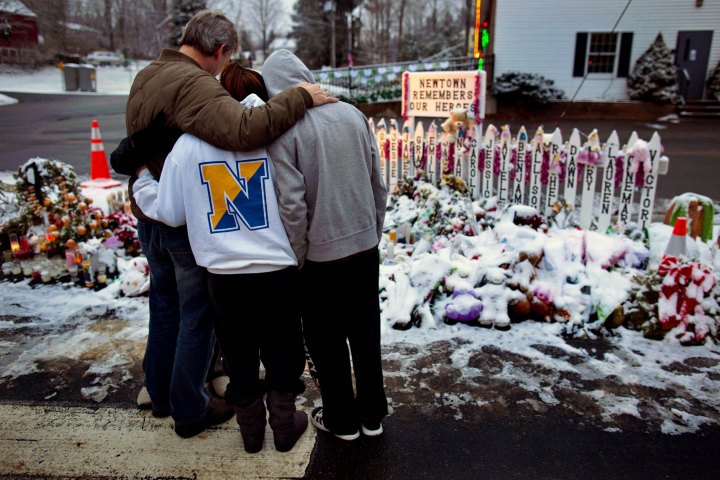
Our National Tragedy


This is Mr. Weber's New Year's assembly address to JPII students on January 3, 2013. 

I hope all of you had a wonderful, restful Christmas and were able to spend a lot of time catching up on sleep, visiting with your family, and slowing down.  On behalf of the faculty and administration of JPII, I wish you a blessed new year and pray that 2013 will be a year of joy and peace for you and your family and a time of great personal growth as students, as Christians and as young men and women.

Just before exams last month, an almost unspeakable national tragedy occurred in the small town of Newton, Connecticut. A twenty year old boy walked into Sandy Hook elementary school and gunned down 20 children, ages six and seven, as well as six adults that tried valiantly to protect them, including the principal, the school psychologist, and four teachers or aides. Moments before he entered the school he had murdered his mother, and after massacring the children at the school, he committed suicide.

It’s impossible to make any sense of that.  People have tried. I will not.  It is a horrible reminder that despite the fact that most people are good and decent, evil is still real and our world is still broken, in need of redemption and healing.

It is also a reminder that each moment of our life is precious. I heard a talk recently in which the presenter told the true story of a woman he met who survived Auschwitz, where so many Jewish people were gassed to death during World War II. This woman was 15 when she was herded up by the Nazis and placed on a train with her 8 year old brother. They had been separated from their parents. During the long and horrible trip on that train, she noticed that her brother didn’t have any shoes on, and she chided her brother like an elder sister might: “You’re so stupid—why can’t you keep your things together, for goodness sake?” It was the last time she ever spoke to her brother—she never saw him again.  He did not survive. When she left Auschwitz, she made a vow, saying she “walked out of Auschwitz into life. “ The vow was “I will never say anything to someone that couldn’t stand as the last thing I’d ever say. “

We grieve for the mothers and fathers, the sisters and brothers of these children who were killed in this national tragedy at Sandy Hook.  I suspect that some of older brothers and sisters of these victims, too, had fussed at their brother or sister that same morning, maybe as they were getting into the car for school that day. I am sure they’re eaten up with guilt and regret, wishing with all their hearts that they could take back the cross words that would be their last exchange together. Pray for them.

There are a lot of people making new year’s resolutions this time of year. Gym memberships are swelling as people try and lose the weight they’ve gained during the holidays. Might I suggest that we resolve to do our best to live by the vow of the Auschwitz survivor—that the words we say to each other might hold up as the last things we’d ever say?  Will we always be successful in this? No, we won’t. But it’s worth living for.   

I think, too, the lesson from this national tragedy is that we have to look out for each other. We’ll be reviewing over our emergency lock-down procedures these next few weeks, and we’ll be practicing them with you. Look for that very soon. But no plan, no security system, no protocols can guarantee our safety. What’s most important is that we talk with each other, and take a kind of “neighborhood watch” approach--all of us looking out for each other. If you have a friend who is struggling emotionally, talk to an adult you trust and share your concerns with him or her. Don’t worry about that person all on your own.  The sooner that person gets help, the less wound up her or she will get. 

I ask one thing from you now. As you know, our doors lock as the school begins each day. Unless that person is a student in JPII uniform, do not open our back doors for visitors. If you think it might be a teacher or staff member, teachers have keys, so you don’t need to open it for them. All visitors are supposed to go through the front door by the flag pole and check in with the office, so send them around. Yes, I know you want to be kind. But just like airline security procedures create a little inconvenience for all passengers, so too must we all insist on front door only. 

Work hard this semester. May God bless you in 2013.

Thank you. 

Monday, October 15, 2012

Difference Maker


Dr. Bill Gavigan and his daughter, Jeannie, with Mr. Weber at halftime.


In this, the beginning of our second decade as a school, we continue to recognize particular people who have made a profound impact on the life and culture of Pope John Paul II High School from our first ten years. At halftime of the football game on October 12, 2012, we gave honor to Mrs. Mollie Gavigan, founder of JPII's Hand in Hand program. The text of Mr. Weber's remarks follow: 


Tonight we give special honor to a woman who is the founder of our “Hand in Hand” program here at JPII. Hand in Hand is a program for students with intellectual disabilities—and it’s a program we are very proud of. Students in our Hand in Hand Program are paired with a learning specialist, Adrienne Parks, and receive intensive educational instruction and support, even while they grow intellectually, spiritually, and morally as part of our school community.  The program has been so successful that it’s been used as a model by other Catholic schools all around the country.

I can’t adequately communicate, as headmaster of the school, how special this program is to the life of our school, and how wonderful the kids who are part of it.   They are generous, kind, and fun loving—and they bring out the best in all of us.

However, Hand in Hand would not exist here were it not for Mrs. Mollie Gavigan.  Molly and Bill are parents of Jeannie, a young lady with downs syndrome, and there were simply no options that could meet their daughter’s needs in our Catholic school system here in Nashville.

So in the summer of 2004, Mollie met in the office of my predecessor, Hans Broekman, to make the case that JPII should start a program for kids with special needs. We spoke recently with Hans, who remembers that meeting very well. Mollie’s message was simple: “The Church is willing to give my daughter the sacraments, but it isn't willing to give her an education. I’ve tried everywhere.” Hans said he tried to put her off and delay, saying the school was still brand new and growing, and it just wasn’t a good time. “Yes,” Mollie shot back, “When I found out that Jeannie had downs syndrome, I also thought “now is not a good time.”  Hans said at that moment, he was convicted, recalling, “I felt, as one does from time to time, the strong presence of the Holy Spirit in my office.”  So he proposed the program to the Board, and they approved it unanimously. 

Mrs. Gavigan, however, did more than begin a program: Realizing that the cost of such a program was far beyond what tuition covers, she committed to spearheading the additional fund-raising necessary to  defray the school’s cost. HH began in 2004 and has been part of our school ever since.  As a result of her efforts, her daughter and six others are now proud alumni of JPII-- and we, likewise, are proud of them.

We regret that Mollie Gavigan died in November of 2006 of breast cancer, so she could not be here tonight to accept this award personally. Standing in to receive this honor in her name are her daughter, Jeannie, a 2008 alum of JPII, her son, Bill, and his two children, and her husband, Dr. Bill Gavigan.  Please join me in thanking them warmly for the contribution of their mother, grandmother and spouse.  

Friday, March 25, 2011

Catholic School Salaries and Pay Scales


In an earlier post, I discussed creative ways to pay Catholic school teachers to secure their services or keep them in the fold, recognizing that often what we can afford to pay is not what area private schools or public schools can offer. Those ways included giving signing bonuses for new teachers, offering low cost rent options using property owned by the Church but no longer used, and offering merit bonuses. I continue to believe each of these is an effective outreach and have used each in my ministry as a Catholic school principal.

Since writing that article, I am now principal of a new school in a new diocese. Unlike my previous diocese, this one does not have a “diocesan pay scale” from which I must pay teachers. Nor does my school’s Board of Trustees dictate a pay scale for our school. Instead, the Board approves a line item in the budget for “salaries” and I have complete freedom within that budget to pay teachers as I see fit, depending on their value to the school and the “market forces” at work for their particular position.

I have found this lack of a prescribed template extremely liberating, and truth be told, in the best interest of the school I serve. In my previous school, I often lost out on the battle for a fine teacher candidate, simply because the salaries I could pay that person paled in comparison to what others were offering. I didn’t go down within a fight, however! I would often “scaffold” his or her salary offer by including a laundry list of non-teaching stipends (coaching, extra-curricular clubs, etc) as a means of approximating market rates. I won some and I lost some. But the truth is, I was waging battle beginning with the self-inflicted wound of a pay scale that worked for some disciplines but not for others.

Let me be specific. Catholic schools have always had the greatest difficulty securing and retaining good science teachers, especially in the physical sciences (Chemistry and Physics). The reasons are simple: What a young graduate in the physical sciences can make in the corporate/business world dwarfs what Catholic school pay scales usually dictate for first year teachers. Depending on the source, the average beginning salary for a person with a B.S. in Physics in the corporate world is between 45K and 60K whereas most Catholic school pay scales currently begin in the high 20’s or low to mid 30’s. And that gap widens as that person gains experience as a scientist! By contrast, when we have an open position in English or History, we are overwhelmed with highly qualified candidates, some with PhD’s, most who are willing to work within the salary scales common to our schools.

Let me guess what some of you may be thinking: Is it just to pay some of our teachers more than others? Are we saying that the cracker-jack English teacher is less deserving of higher wages than teachers in our science department? I’d say “No, the cracker-jack English teacher is not less deserving.” But let me quickly add: If a school has a true maestro teaching English, they’d be wise to compensate that person generously, because they are a rare and great gift to the school! And in a school unconstrained by a pay scale, such maestros can be rapidly rewarded by higher than average increases in salary in successive years of teaching. But I believe it is foolhardy to insist that the beginning teaching salaries for English and Physics teachers should be the same. Once they’re in the fold, without a pay scale to hamstring them, principals can make rational judgments about relative worth and adjust salaries accordingly down the road.

In the world we live in, those with science degrees get paid more than those with degrees in Arts and Letters. As an Arts and Letters guy myself, I was painfully aware of that reality when I decided to major in theology, and reminded of it every time someone asked me “What are you going to do with a theology major, become a priest?”

Insisting on a common pay scale artificially inflates what we need to pay some incoming teachers, or (more commonly) artificially deflates what we should offer others. Abolish pay scales. They don’t help us.

Sunday, January 18, 2009

An Integrated Family Life


Prior to moving to Hendersonville, we lived in Montgomery, AL and were members of St. Bede parish. All of my children attended St. Bede School. St Bede had 4 basketball teams at each age level in a Catholic school basketball league comprised of all the other schools and parishes in Montgomery, very similar to the CYO program here in Nashville. Typically in leagues like this, the coaches are pretty much the same group of men, who then move up each grade level as their children get older, so you get to know these guys pretty well and develop friendships with them. Four of those teams were from my parish school, and the coaches of those teams and I had a good time over the years teasing each other whose team had beaten whom, who had the overall best record between us, that kind of thing. Being from the same parish and school, our sons knew each other, our wives were friends, we worshiped together, it was a family affair.

One of those men had a son who was a very good athlete, so good that as the son approached 7th grade, one of the more affluent private schools in Montgomery began to talk to this man about placing his son in their school. Whereas the Catholic middle school and high school athletic program to which we were all headed might be rated a “B” in terms of wins-losses, this private school was an “A”, and as visions of college athletic scholarships danced in the father’s head, he decided to pull his son out of our Catholic school and place him in the private school.

As our sons grew up during the years of middle school and high school, the fraternity of fathers that dated back to when our sons played 2nd and 3rd grade basketball became stronger. We traveled to remote gyms together in names of towns in Alabama that I didn’t know existed, despite living my entire life in that state. Our families cheered together in the big wins, we mourned the losses, felt badly for each others' sons when they missed crucial free throws down the stretch, exalted in each others' sons when they hit the big shot. At Sunday morning mass after a big weekend game, we’d talk about the game, speculate about the next one, Sunday morning quarterback our coaches’ decisions---and there would be lots of laughter and smiles.

The dad who placed his kid in the private school remained a member of our parish. We’d see him each Sunday, make some pleasant small talk, congratulate him if we read in the paper that his son played a good game. It was very evident, however, that he was no longer a member of the same fraternity—not because he was being excluded, but because as a member of different community, we simply didn’t continue to share those common experiences together. I remember one particular football game in which his son’s team played our team in football, and I felt bad for him---on one side of the field were his church, his long time friends, the folks he had built common memories with—on the other side, his son’s team and his new acquaintances. The first few years we played, he didn’t know where to stand during the games, so he’d stand in the end zone, almost directly in the middle, until over time, his friendships began to evolve toward those of the private school and he began to sit in their bleachers.

I think one of the decisions we make when we choose a school for our child is NOT just whether it’s a good academic school, or whether it will teach the faith effectively, or whether it’s a good fit for our child. Those are all good questions, but they are not the only considerations. It’s also a question of who OUR friends will be, what community will WE live in, and whether or not there will a connection between our family’s life, our faith, our passions and our energies.

Let’s be honest. Given the hectic pace of our lives, about the only thing we’re going to leave the house for when we get home from work is to go see our kids do something—whether that be an athletic event, a piano recital, or some other performance. When our kids are young, we’re not headed out to the union meeting, or a night at the bars with the fellas, or a book-club, or a routine get-together with our best friends. Our lives, rather, revolve around our children, and the friendships we make and the experiences we have are directly tied to the events of their lives.

Catholic schools offer their families the chance for an integrated life—where school, the practice of faith, the extra-curricular life of our children, who are friends are, and the experiences we share together, can all become part of a whole, and not remain distinct, disconnected fragments that we must juggle. This is, perhaps, the greatest blessing that Catholic schools can provide Catholic families.

Saturday, July 22, 2006

Catholic Teacher's Salaries (and ways to improve them!)


Nationally, private school teachers make about 14,000 less dollars less per year than their public school counter-parts, according to the National Center for Educational Statistics. I suspect that Catholic school teacher salaries are even less. As a matter of justice, we ought to be doing better.

But it's not so simple. Raising substantial funds to bring our teachers to par with public schools means as much as 50-100% increases in tuition, all but eliminating middle income Catholic families from being able to attend our schools and making our schools less competitive in the market-place. It doesn't help to raise teacher salaries if there are no students paying tuition!

In addition to the sacrifices our teachers make, low salaries hurt our school, too. We've been looking to hire an A.P. Physics teacher for the last five months, and it's not hard to understand why we're not having much luck. Entry level positions for recent college graduates with degrees in Physics begin anywhere from 40K to 60K in our region of the country, and frankly, teaching A.P. Physics requires teachers ideally with graduate degrees and teaching experience.

So what can we do?

First, we really have to be shrewd stewards by collecting all possible revenues, so as to be able to give teachers healthy, incremental raises each year. I've written recently on the importance of developing a generous financial aid program, which allows a school to raise tuition rates more quickly, protecting its less wealthy families even while generating funds by filling empty seats. I also wrote much earlier here about practical ways a school can increase revenues by tweaking routine operational procedures. In this article, I want to focus exclusively on teacher compensation, and look at three ideas that have merit, I believe, in attracting and sustaining teachers without breaking the bank.

1) Merit Bonuses-- The problem with raising salaries substantially across the board is that it's too expensive, and allocates scarce resources to mediocre and excellent teachers alike. Merit bonuses, if set up correctly, allow us to target our resources to the teachers we most want to hire or keep. Yet we're reluctant in Catholic schools to implement merit systems--partly because diocesan lawyers fret about potential lawsuits and partly because merit systems require us as administrators to do an exceptional job of supervising, so that we can fairly make distinctions between teachers. And who among us wants to go on record publicly as saying teacher X is better than teacher Y?

But merit systems can be set up fairly, without requiring impossibly time consuming commitments from administrators. A Catholic colleague of mine has set up a set of 7 objective criteria for her high school teachers, five of which must "checked" each year to receive an additional $5,000 bonus that year. These criteria include such things as a graduate degree, a certain number of professional development hours, a portfolio, kept according to specifications, a minimum score on a classroom evaluation (done by her), a talk or workshop at a national or regional convention in one's field, etc. Were our Board to approve of merit pay, I would probably include a certain score on the end of year evaluations of courses by students and parents as an additional criteria.

Where does she get the money to write $5,000 checks? As she points out, the criteria are sufficiently demanding to weed out all but a few teachers, so the annual cost of the system is not as high as it might first sound! But the school did have a merit fund, developed as a subset of a much larger capital campaign, and donors to the school are now encouraged to give to this fund as an option within the school's annual fund drive. But it need not be this highly endowed. Instead of a 4% increase in salaries for next year, costing the school, let's say, $50,000, the board could decide to only give 2% raises, and let the other 25,000 be distributed according to merit criteria.

2) Signing Bonuses--We read about million dollar signing bonuses for athletes, but most of us don't think about using signing bonuses in our schools. Such bonuses could work for us, especially if we're trying to land a highly competitive teacher candidate (like an A.P. Physics teacher!). The advantage of a signing bonus is three-fold: it's only a one time outlay for the school, it gives them money at exactly the time a teacher likely needs it most (especially if he or she must move into the area) and it can be targeted according to certain criteria or positions. $3,000 or so, paid up front, makes our schools more attractive.

3) Joint housing agreements--Likelier than not, there is empty rectory or convent space in your area. It sits there, empty, all year, even though the parish or religious order must pay to maintain it. Packaging a job offer with a low cost housing rental agreement could make your school a financially viable place to work, especially for a young, single person. It's a "win-win-win" for all those involved: the school pays nothing but offers a genuine "benefit", the parish/order gets some income whereas before they got none, and the young faculty member is able to save more each month from what is, alas, too puny a salary!

Conclusion: All of us understand that the quality of teachers is the most important factor in how well we educate our children. In the "old days", we could rely on the heroic commitment of the nuns to carry this load. No more. We've got to be willing to explore new paradigms and act creatively.