This is Mr. Weber's assembly address with students on March 5, 2012. Let's begin by taking this simple little test. Check the one that seems to most apply to you. Be honest with yourself; there are no right or wrong answers.
1.Setbacks don’t discourage me.
•Very much like me
•Mostly like me
•Somewhat like me
•Not much like me
•Not like me at all
2.I am a hard worker.
•Very much like me
•Mostly like me
•Somewhat like me
•Not much like me
•Not like me at all
3. I finish whatever I begin.
•Very much like me
•Mostly like me
•Somewhat like me
•Not much like me
•Not like me at all
4. I am diligent (attentive and persistent in doing something).
•Very much like me
•Mostly like me
•Somewhat like me
•Not much like me
•Not like me at all
-------
5. New ideas and projects sometimes distract me from previous ones.
•Very much like me
•Mostly like me
•Somewhat like me
•Not much like me
•Not like me at all
6. I have been obsessed with a certain idea or project for a short time but later lost interest.
•Very much like me
•Mostly like me
•Somewhat like me
•Not much like me
•Not like me at all
7. I often set a goal but later choose to pursue a different one.
•Very much like me
•Mostly like me
•Somewhat like me
•Not much like me
•Not like me at all
8. I have difficulty maintaining my focus on projects that take more than a few months to complete.
•Very much like me
•Mostly like me
•Somewhat like me
•Not much like me
•Not like me at all
(Duckworth, A.L., Peterson, C., Matthews, M.D., & Kelly, D.R. (2007). Grit: Perseverance and passion for long-term goals. Journal of Personality and Social Psychology, 9, 1087-1101.)
This simple little test is called a “grit” test. They gave it to over 1200 West Point cadets, incoming freshmen, to see if it could help the Army predict who might succeed, and who might wash out of their summer training program. The U.S. spends a lot of money on training its soldiers, and tests potential recruits rather rigorously to see who is worth investing in. It turns out this simple test, completed in 3-4 minutes, is much more highly predictive of success than anything the Army had developed up until that point.
Why? Because the army will tell you—and not just the army but coaches, employers, businessmen—that grit is a more important predictor of long term success than even talent. There are a lot of talented people, people with high ACT averages for example, who wash out of college because they don’t have the drive, the perseverance, the “want to” to succeed. There are basketball players playing pick-up games on the streets of New York who have more natural talent than players in the NBA, but never had the grit to do well enough in high school to go to college and develop their game. There are many unemployed geniuses.
So let’s see where you stand:
For questions 1-4, assign the following points:
5 = Very much like me
4 = Mostly like me
3 = Some what like me
2 = Not much like me
1 = Not like me at all
For questions 5-8, assign the following points:
1 = Very much like me
2 = Mostly like me
3 = Some what like me
4 = Not much like me
5 = Not like me at all
Add your points and divide by 8. If you have a 4-5 average, you are very gritty. If you have a 1-2 average, you need to challenge yourself to become more gritty!
The good news is grittiness is something we can get better at, something we can control. Talent is God-given in large measure, but grit is a matter of perseverance, of drive, of the willingness to fail and having the guts to keep plugging. It’s a matter of heart.
If you were at our girls’ basketball game this Friday, you’d have noticed that on certain defensive rotations, Demisha Porter, all five foot nothing of her, was having to defend the post against Christina Slay, who is 6’ tall, Ensworth’s best player and one of three state finalists for Miss Basketball. Demisha battled, pushed, fronted her, cleared her out with her much smaller frame. She was “scrappy.” Yes, we lost the game, but Slay was held to just 6 points the entire game, her lowest output of the season.
My wife has a student in Geometry she really admires. Geometry is hard for him, and he often does poorly on tests. But he comes to every tutorial, sometimes before and after school on the same day. He always does his homework. He doesn’t let poor grades get him down—in fact, they seem to inspire him to work harder. She is convinced he will be a success because he has the drive, the grit to succeed.
Thomas Edison was one of our nation's greatest inventors, and still holds the United States record with 1093 patents. Contrary to myth, he didn’t
invent the light bulb. But he did design a light bulb that gave off enough light to be useful, didn’t burn out very quickly, wasn’t prohibitively expensive, and therefore was practical for common use. To do that, he did over 1000 experiments, trying to find the right combination of materials, failing repeatedly. When he was asked about it, he said famously, “ I have not failed 1000 times. I have successfully discovered 1000 ways how NOT to make a light bulb, and I am that much closer to the solution. "
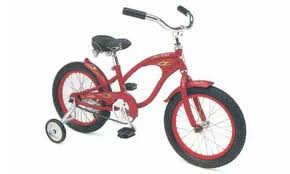
You may remember at the beginning of this year, I told you the story of the little boy in my neighborhood who was learning how to ride a bike and kept crashing. But he kept getting up each time, until after about the 15th crash, he was able to wobble down the street on this own. I said to you then that I hoped you would “fail often” this year, but have the drive, the guts, to get back up. If you are doing that, it’s a sign that you’re really pushing yourself beyond your comfort zone, that you’re expanding yourself, pushing past limits. It’s a sign of grit.
A couple of weeks after we get back from Break, I am declaring a “failure week” at JPII, in which all of us celebrate our biggest flops, our biggest failures. Yes, that’s right--I want to celebrate failure. I’m going to encourage House Masters and House leadership to find ways to do this by telling stories about failures with each other. No, that week is NOT going to be an excuse to TRY to fail. You can’t say: "Well, Mom, Mr. Weber said it was failure week, so I thought I’d do my part by getting an F on the test." But it will be a week that says, you know what? Failing is OK from time to time if it indicates that we're pushing ourselves outside of our comfort zone, if it inspires us to get after it, if it helps us grow. So be thinking of ways we might be able to celebrate that.

 They
call it “rubbernecking.” That’s what we instinctually do when we’re driving in
a car and pass by an accident. We strain our necks trying to peer out and catch
sight of the victims of the crash.
They
call it “rubbernecking.” That’s what we instinctually do when we’re driving in
a car and pass by an accident. We strain our necks trying to peer out and catch
sight of the victims of the crash.